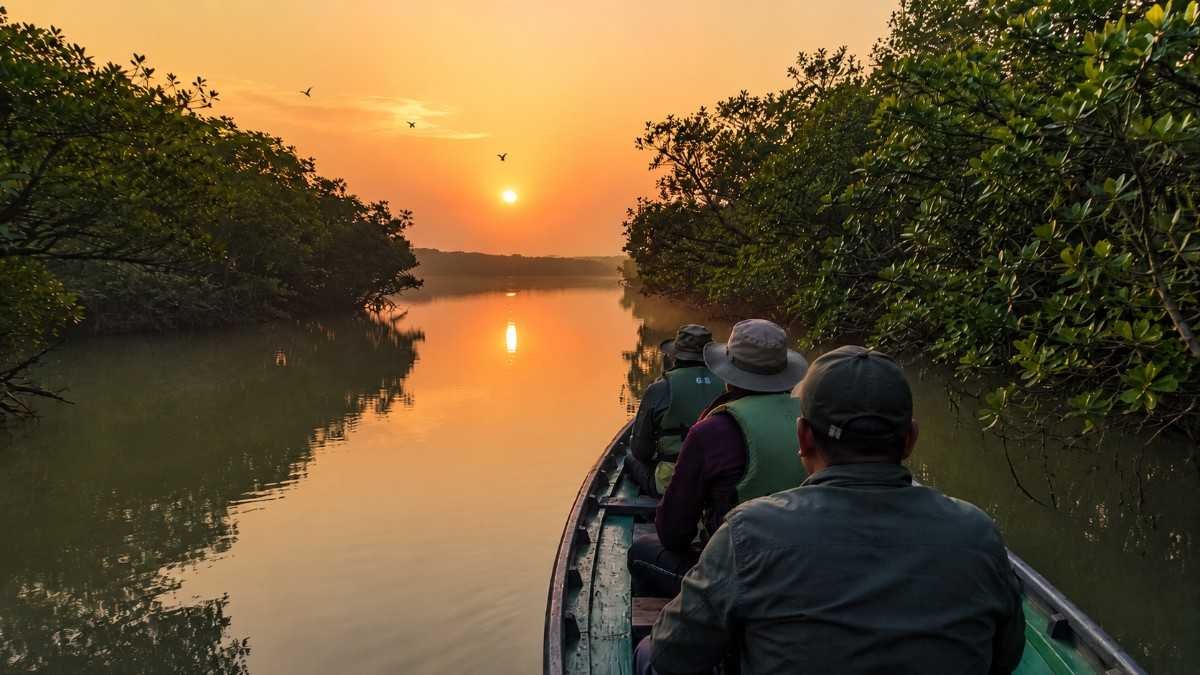
Bhitarkanika National Park holds one of the highest concentrations of saltwater crocodiles anywhere in the world. Spread across 145 sq km in the Kendrapara district of Odisha, this mangrove wilderness sits where the Brahmani, Baitarani and Dhamra rivers meet the Bay of Bengal, creating a network of tidal creeks, mudflats and estuaries that support an extraordinary range of wildlife.
Often called India’s “mini Amazon,” Bhitarkanika is the country’s second-largest mangrove ecosystem after the Sundarbans. But unlike the Sundarbans, Bhitarkanika remains relatively uncrowded, offering a quieter, more intimate wildlife experience. Whether you are planning a weekend escape from Bhubaneswar or a dedicated wildlife photography trip, this guide covers everything you need before you visit Bhitarkanika National Park.
You will find the wildlife to expect, how boat safari bookings work, the best months to travel, entry fees, and the most practical way to reach the park from Bhubaneswar, Cuttack, or Kendrapara. Safari slots, entry rules, and closure dates change through the year, so read through before you plan your trip.
Bhitarkanika National Park: Quick Facts
| Location | Kendrapara district, Odisha |
| Total Area | 672 sq km (Sanctuary); 145 sq km (National Park core) |
| Established | 16 September 1998 (protected as a wildlife sanctuary since 1975) |
| Ramsar Status | Designated 19 August 2002, Ramsar Site No. 1205, Wetland of International Importance |
| Entry Points | Khola and Gupti (main gates); Dangamal and Rajnagar (checkpoints) |
| Open to Tourists | 1st August to 30th April (approx.) |
| Closed for Tourists | 1st May to 31st July (crocodile nesting season) |
| Park Timings | 7:00 AM to 5:00 PM |
| Nearest Airport | Biju Patnaik International Airport, Bhubaneswar (~150 km) |
| Nearest Major Railway Station | Bhadrak (~70 km) or Cuttack (~120 km) |
| Nearest Town | Kendrapara |
What Is Bhitarkanika National Park
Bhitarkanika National Park sits inside the Brahmani-Baitarani river delta, in Kendrapara district on Odisha’s coast. Rivers, creeks, and tidal channels cut through the park. They feed a dense mangrove forest, the second largest in India after the Sundarbans in West Bengal. Around 60 mangrove species grow here, one of the richest counts recorded anywhere in the country.
The government protected this area as a wildlife sanctuary in 1975. It became a national park on 16 September 1998. In 2002, the Ramsar Convention listed it as a Wetland of International Importance. The designation came on 19 August 2002, as Ramsar Site No. 1205. This status recognises the park’s role in supporting crocodiles, migratory birds, and marine turtles.
Bhitarkanika National Park is not a UNESCO World Heritage Site. Odisha put it forward for consideration. The IUCN evaluation team rejected the request in July 2017. Reviewers pointed to villages and farming inside the park boundary as one concern. Reduced freshwater flow and the nearby Dhamra port added to the list. The park keeps its National Park and Ramsar status regardless. Both matter more for daily protection than a heritage title would.
Why Visit Bhitarkanika National Park
Bhitarkanika is one of those rare places where you can observe saltwater crocodiles from just a few metres away, basking on the muddy banks of narrow creeks. The park’s crocodile population has grown from fewer than 100 individuals in 1974 to approximately 1,858 as per the January 2026 census, making it India’s most successful crocodile conservation story.
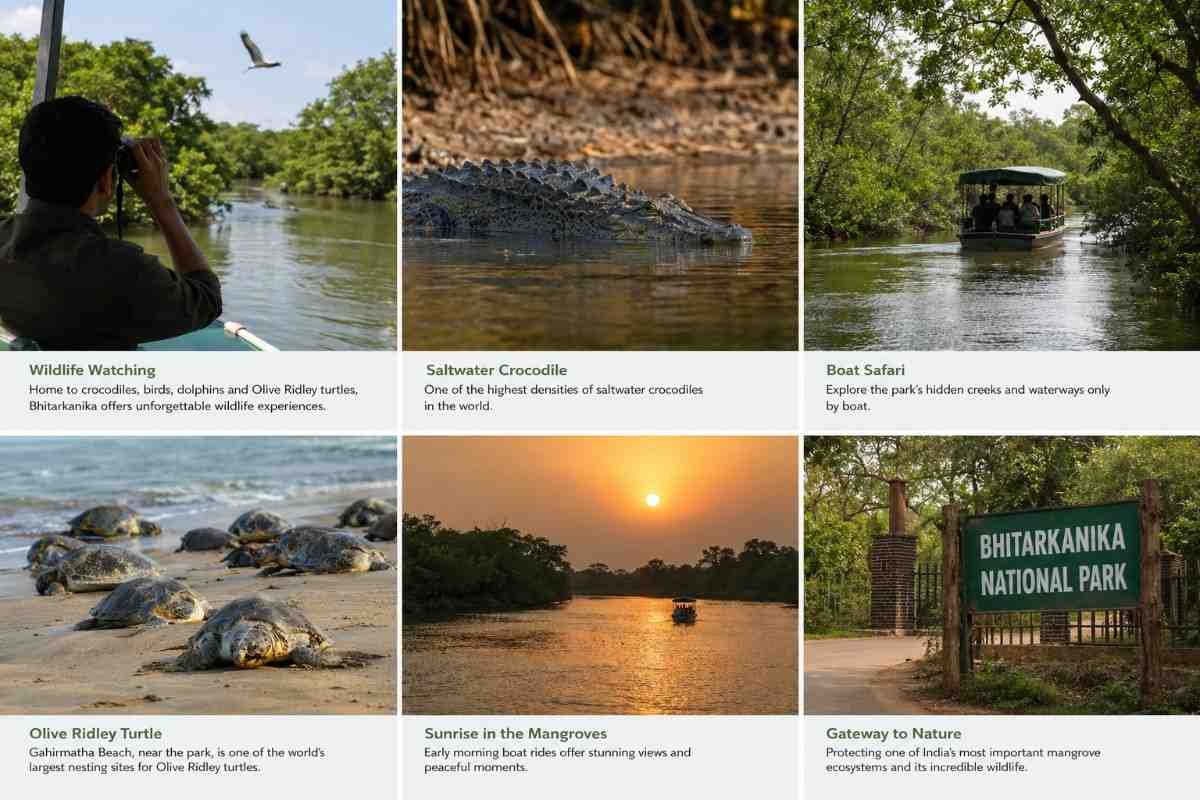
Beyond crocodiles, the park is home to spotted deer, wild boar, rhesus monkeys, Indian pythons, king cobras, water monitor lizards and fishing cats. Over 215 species of birds have been recorded here, including large numbers of winter migrants from Central Asia and Europe. The adjacent Gahirmatha Beach is the world’s largest nesting ground for Olive Ridley sea turtles.
Wildlife You Will See in Bhitarkanika National Park
Reptiles
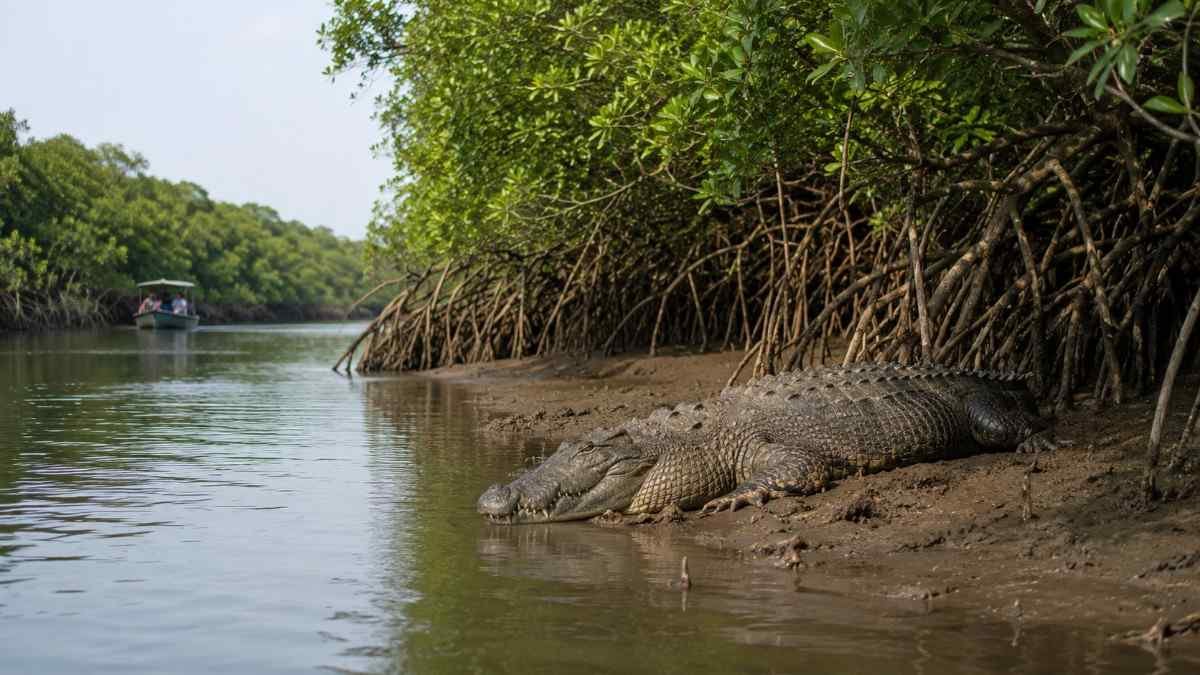
The saltwater crocodile is the undisputed highlight. Some individuals here grow to over 20 feet in length, and Bhitarkanika is widely considered the best place in India to observe them in the wild. The Odisha Forest Department’s 2026 census counted 1,858 estuarine crocodiles across the park’s creeks and rivers. That is up from 1,826 the year before, and 1,811 the year before that. Numbers have climbed steadily since the 1970s, when hunting and habitat loss had pushed the species toward local extinction. Watch for crocodiles basking on mud banks near Dangamal, especially during the cooler morning hours.
Water monitor lizards, Indian pythons, king cobras and several other snake species are also found throughout the park.
Mammals
Spotted deer (chital) and wild boar are abundant on the forested islands and are commonly seen during nature walks at Dangmal. Rhesus monkeys are present in good numbers. Less commonly spotted animals include fishing cats, jungle cats, leopard cats and occasionally hyenas. Irrawaddy dolphins surface where the rivers meet the sea. Sightings depend on tide and season, so bring binoculars and stay patient if dolphins are on your list.
Birds
Over 215 species of birds have been recorded in Bhitarkanika, making it a significant destination for birdwatchers. Resident species include multiple varieties of kingfishers, white-bellied sea eagles, Brahminy kites, darters, cormorants and egrets. The mangrove pitta also lives here, a bird rarely seen outside a handful of Indian forests. The Bagagahana heronry supports nesting colonies of open-billed storks, grey herons, purple herons, night herons and several other species.
During the winter months (November to February), migratory birds arrive from Central Asia and Europe, including bar-headed geese, pintails, teals and various wader species. Around 120,000 migratory and 80,000 resident birds have been estimated to visit the park annually.
Olive Ridley Turtles
Gahirmatha Marine Sanctuary lies just east of the park, along the Bay of Bengal coast. It holds the record as the world’s largest known nesting beach for Olive Ridley sea turtles. Between January and March, hundreds of thousands of these endangered turtles come ashore for mass nesting in a phenomenon called “Arribada.” While Gahirmatha itself has restricted access, certain areas near Bhitarkanika allow visitors to witness this spectacle during the season.
The mangrove forest supports this entire ecosystem. Dense stands of Heritiera and Excoecaria line the waterways and give crocodiles, birds, and smaller mammals their shelter.
Monthly Wildlife Calendar for Bhitarkanika National Park
Wildlife sightings at Bhitarkanika depend on the season, weather and sheer luck. No visit guarantees a specific sighting, but this month-by-month guide gives you a general idea of what to expect throughout the year.
| Month | What You May See or Experience |
|---|---|
| January | Peak birdwatching season with migratory species from Central Asia and Europe. Crocodiles visible on banks. Olive Ridley turtles begin arriving at Gahirmatha for nesting. Park may close for about a week for the annual crocodile census. |
| February | Excellent for both birds and crocodiles. Migratory birds still present. Olive Ridley nesting activity continues. Comfortable weather for boat safaris. |
| March | Temperatures begin to rise. Crocodiles bask more frequently on mudflats. Last of the migratory birds before departure. Turtle nesting may still be visible. Mangrove pitta sightings become more likely. |
| April | Hot weather, but reptile sightings can be rewarding. Water monitor lizards and snakes are more active. Bird numbers thin out. Last month before the park closes. |
| May – July | Park closed. Crocodile mating and nesting season. Female crocodiles lay eggs and guard nests aggressively. No tourist access. |
| August | Park reopens (usually 1st August). Monsoon greenery is at its peak. Crocodile hatchlings may be visible. Resident water birds nesting at Bagagahana heronry. Expect rain. |
| September | Lush mangrove vegetation. Nesting of resident birds continues at Bagagahana. Spotted deer and monkeys are visible on the islands. Rain is still likely. |
| October | Weather begins improving. Crocodile sightings increase as basking becomes more frequent. Early migratory birds start arriving. Good month for quieter visits with fewer tourists. |
| November | One of the best months. Migratory birds arrive in large numbers. Comfortable temperatures. Crocodiles, deer, wild boar and monkeys regularly spotted. Tourist season picks up. |
| December | Peak tourist season with the highest visitor numbers. Birdwatching is exceptional. Cool, pleasant weather makes full-day boat safaris comfortable. Crocodiles are readily visible on the banks. |
Best Time to Visit Bhitarkanika National Park
The ideal time to visit Bhitarkanika is between October and March. During these months, the weather is pleasant, water levels in the creeks are manageable and wildlife sightings are at their best. This period also overlaps with the arrival of migratory birds and the start of the Olive Ridley turtle nesting season.
Season-by-Season Breakdown
Winter (October – February): This is the peak season. Temperatures are comfortable, migratory birds are present in large numbers and crocodile sightings along the creek banks are frequent. November and December are especially popular.
Summer (March – April): Temperatures rise significantly, but wildlife sightings — especially of crocodiles basking in the sun — can actually be quite good. Carry plenty of water and sun protection. Stick to early morning slots, since afternoon heat pushes animals into shade and water.
Monsoon (May – September): The park is closed to tourists from 1st May to 31st July every year, reopening on 1st August. This protects nesting and breeding crocodiles during the monsoon. The park also closes briefly during the first or second week of January for the annual crocodile and bird census — the exact dates change each year.
Confirm the current year’s exact closure dates with the forest department before you plan travel close to this window. Dates can shift by a week or two. Book your stay in Kendrapara and your safari slots a few weeks ahead if you are travelling in peak season. Rooms and safari slots both fill up fast around long weekends.
Bhitarkanika National Park Entry Fee
Entry fees at Bhitarkanika are collected by the Odisha Forest Department at the forest gates (Khola or Gupti). These charges are subject to revision by the department at any time, so it is a good idea to verify the latest rates before your visit.
Entry Fee for Indian Visitors
| Fee Type | Approximate Charge |
|---|---|
| Entry permit (per person per day) | ₹20 – ₹40 |
| Still / digital camera | ₹50 per camera |
| Video camera | ₹500 – ₹1,000 per camera |
| Boat hire (full day, government boat) | Approx. ₹2,800 – ₹3,500 per boat |
| Guide fee (mandatory) | ₹100 – ₹200 |
Entry Fee for Foreign Visitors
| Fee Type | Approximate Charge |
|---|---|
| Entry permit (per person per day) | ₹100 – ₹1,000 (varies; groups of 10+ may get reduced rates) |
| Still / digital camera | ₹200 per camera |
| Video camera | ₹1,000 – ₹10,000 per camera |
| Boat hire | Same as Indian visitors |
| Guide fee | ₹200 or more |
Why the ranges? The Forest Department revises fees periodically, and different sources report slightly different figures. The core entry fee for Indian visitors has historically been around ₹20–₹40 per person, while foreign visitor fees vary more widely. Mobile phone cameras are generally not charged separately, but DSLR and video equipment typically attract additional fees.
All fees are collected at the forest gate at the time of entry. Carry original ID (Aadhaar, passport etc.) as it is required when obtaining the entry permit. Foreign visitors should carry their passport and visa copies.
Boat Safari at Bhitarkanika National Park: Booking and What to Expect
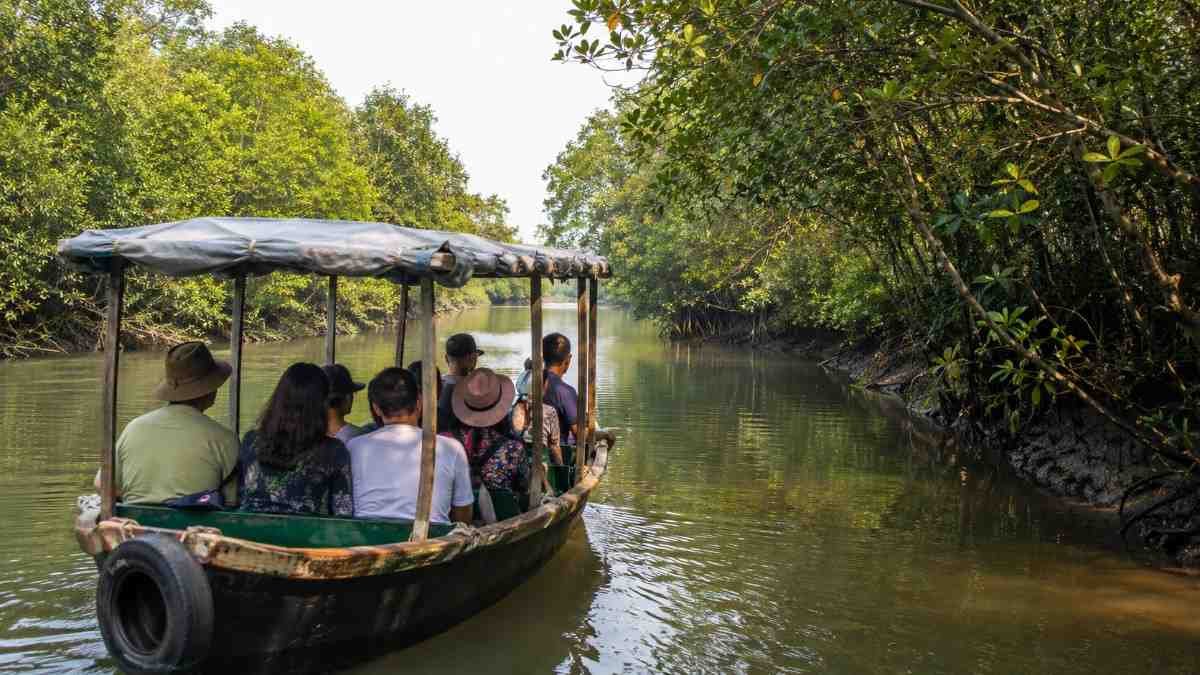
The boat safari is the primary way to explore Bhitarkanika National Park. There are no jeep safaris here — the entire experience is waterborne, through mangrove-lined creeks and tidal channels. Government-approved motorboats, licensed by the Forest Department, are available for hire at both entry points.
Main Entry Points
Khola Gate: About 30 km from Rajnagar by road. The Khola creek is narrower and winds through denser mangrove forest, which generally means better chances of spotting crocodiles resting on the banks at close range. This is the more popular entry point for wildlife-focused visitors.
Gupti Gate: About 25 km from Rajnagar by road. The Gupti route passes through broader river channels, offering wider views of the landscape. This route is commonly used to reach Habalikhati Beach and the outer islands.
Common Safari Routes
Khola → Dangmal: This is the most popular route for first-time visitors. The boat travels along a man-made creek through dense mangrove forest, passing through the core wildlife zone. This stretch offers some of the best crocodile sightings, along with kingfishers, egrets, monitor lizards and spotted deer on the banks. Duration is approximately 1.5 to 2.5 hours one way, depending on tide conditions and the size of the boat.
Dangmal → Bagagahana Bird Sanctuary: Bagagahana, meaning “thicket of herons,” is a 22-acre heronry and nesting site for over 11 species of resident water birds, including open-billed storks, grey herons, purple herons, night herons and darters. From a watchtower, you can observe the nesting colonies. This is typically a short extension from Dangmal.
Gupti → Habalikhati Beach: A longer route that takes you out towards the coast. Habalikhati is a quiet beach where you can walk along the sand and enjoy the meeting point of river and sea. The boat ride from Gupti to Habalikhati takes approximately 2 to 3 hours one way.
Creek exploration routes: Smaller creeks branching off the main channels can be explored when tides are favourable. These narrower waterways often yield the most rewarding wildlife sightings, including close encounters with basking crocodiles and flocks of wading birds.
Safari Timing and Duration
Park hours run from 7:00 AM to 5:00 PM, with last entry around 3:30 PM. Within this window:
- Morning safaris (7:00 AM – 12:00 PM) are ideal for birdwatching and cooler conditions
- Afternoon safaris (12:00 PM – 5:00 PM) often offer better crocodile sightings as the afternoon sun draws them out to bask
- Full-day safaris covering Khola → Dangmal → Bagagahana and back typically take 4 to 6 hours, depending on stops and tide
The actual duration of your safari depends on the route chosen, the number of stops, tide conditions and your operator. Always discuss the route and expected duration with your boatman and guide before setting out. Choose the morning slot if wildlife viewing matters more than convenience. Crocodiles and birds stay active before the heat sets in.
Booking a Boat
Boats can be hired directly at the Khola or Gupti forest offices on a first-come, first-served basis. A full-day boat hire typically costs around ₹2,800 to ₹6,000, depending on the type of boat, route and number of passengers. For peak-season visits (November – February), it is advisable to book through the official Odisha Ecotourism website (ecotourodisha.com) or arrive early in the morning to secure a boat.
A licensed forest guide is mandatory for all safaris and can be arranged at the forest office. Carry a valid photo ID to complete your permit at the gate. Officials record your details and issue an entry pass alongside your boat ticket. Keep both on hand through your visit.
Dangmal Crocodile Centre
Dangmal is the heart of Bhitarkanika National Park and home to the Crocodile Conservation and Research Centre, established in 1975 under the Baula (Crocodile) Project. This facility plays a central role in Bhitarkanika’s remarkable crocodile recovery — the population has rebounded from critically low numbers to nearly 1,900 individuals over five decades.
What to See at Dangmal
The centre houses a crocodile breeding and rearing facility where you can observe saltwater crocodiles at various stages of growth, from recently hatched juveniles to fully grown adults. The star attraction is Gori (also called Gauri), a rare white crocodile kept in a dedicated enclosure — an animal you are unlikely to see anywhere else in India.
Adjacent to the breeding enclosures is a small museum that displays crocodile skulls, preserved specimens, information panels on mangrove ecology and details about the conservation programme. A six-metre-long crocodile specimen gives you a real sense of the scale these animals can reach.
There is also an interpretation hall where film screenings about Bhitarkanika’s ecosystem are available on request. An interesting curiosity is an enclosure where a python and a king cobra coexist — a sight that surprises most visitors.
How to Reach Dangmal
Dangmal is accessible by boat from both entry points. The boat ride from Khola to Dangmal passes through narrow, densely forested mangrove creeks and is itself one of the highlights of any Bhitarkanika visit. Dangmal can also be reached by road from Rajnagar via the Khola check gate.
Most visitors combine their Dangmal visit with a short nature walk through the surrounding forest, where you may spot spotted deer, monkeys, red crabs and various bird species. If your timing is right, you may also witness the crocodile feeding session at the breeding centre.
Wildlife Photography Tips for Bhitarkanika National Park
Bhitarkanika is a rewarding destination for wildlife photography, but shooting from a moving boat on tidal waters has its own challenges. Here are some practical tips to help you come back with better photographs.
Camera and Lens
A telephoto zoom lens in the 200mm to 400mm range is ideal for photographing crocodiles and birds from the boat. If you only have a kit lens or a smartphone, you can still get decent shots of the larger crocodiles that bask close to the waterline, but distant birds will be difficult to capture in detail. A wider lens (24–70mm) is useful for capturing the mangrove landscape and the overall atmosphere of the creeks.
Camera Settings
Use a fast shutter speed — at least 1/1000th of a second for birds in flight and 1/500th or faster for stationary subjects. Boat movement adds camera shake, so keep your ISO high enough to maintain these shutter speeds. Continuous autofocus mode helps when tracking moving subjects. Shoot in burst mode to increase your chances of getting one sharp frame.
Shooting from the Boat
- Sit low and brace your elbows against the side of the boat for stability. Tripods are generally impractical on these boats; handheld shooting or a monopod works better.
- Ask the boatman to cut the engine and drift when you spot wildlife. The noise and vibration of the motor can blur your images and startle animals.
- Never use flash. Flash startles wildlife and is prohibited in many protected areas. Natural light is always the better choice.
- Position yourself so you are shooting towards the light or with side light when possible. Early morning light (between 7:00 and 9:00 AM) produces the warmest, most flattering results.
Protecting Your Equipment
The mangrove environment is humid and splashing water is inevitable on a boat. Carry a waterproof dry bag or a rain cover for your camera and lenses. Keep a microfibre cloth handy to wipe water droplets from the front element. When not actively shooting, store your camera in the dry bag to protect it from spray and humidity.
General Tips
- Focus on the eyes. Whether you are photographing a crocodile with just its head above water or a kingfisher on a branch, a sharp eye makes the image.
- Be patient. Crocodiles may appear motionless for long stretches, then suddenly open their jaws or slide into the water. Stay ready.
- Maintain a safe distance. Do not lean over the boat or ask the boatman to approach wildlife too closely. Apart from the safety risk, stressed animals move away, and you lose the shot.
- Bring extra batteries and memory cards. A full-day boat safari can drain batteries quickly, especially when using continuous autofocus and burst mode.
How to Reach Bhitarkanika National Park
By Air
The nearest airport is Biju Patnaik International Airport in Bhubaneswar, approximately 145–160 km from the park entry points. From the airport, you can hire a taxi or arrange a private car to reach Khola or Gupti. The drive takes approximately 3.5 to 4.5 hours depending on the route and traffic.
By Train
Bhadrak Railway Station is the closest major railhead, about 70 km from the park, on the Howrah-Chennai line. From Bhadrak, a taxi to Chandbali (and then a boat to the park) or directly to Khola/Gupti by road takes about 1.5 to 2 hours. Cuttack Railway Station, around 120 km away, is another well-connected option.
By Road
The common road route from Bhubaneswar is via Cuttack → Kendrapara → Pattamundai → Rajnagar → Khola Gate. This is approximately 150 km and takes around 3.5 to 4 hours by car. If coming from Kolkata or northern Odisha, the route via Bhadrak → Chandbali is more convenient. Public transport to the entry points is limited, so hiring a private car or taxi is recommended. From Kendrapara town, the Khola entry point is about an hour’s drive.
This section only covers the basics. For a complete gate-wise route breakdown, read our guide to Kendrapara to Bhitarkanika distance. It covers the drive from each major city in more detail.
Where to Stay Near Bhitarkanika National Park
No hotels operate inside Bhitarkanika National Park. The core area exists to protect wildlife, not to host overnight guests. A small forest department nature camp near Dangamal offers limited beds (booked through ecotourodisha.com), and it fills up quickly during peak season.
Kendrapara town works as the more practical base for most visitors. It sits close enough to the park for an early start. It also offers steadier power, water, and hotel service than options right at the park boundary. Binayak Palace Premium is one dependable hotel near Bhitarkanika, close to the main route into the park.
Book a hotel near Bhitarkanika National Park in Kendrapara ahead of your trip. This matters most if you are travelling in peak season or over a weekend. Read our related guide on the best hotels near Bhitarkanika to compare a few options before you book.
What to Carry for Your Bhitarkanika National Park Visit
- Light, breathable clothing in neutral colours, since bright colours can disturb wildlife and draw insects
- A hat and sunscreen for daytime safaris, plus a light jacket for early morning boat rides
- A camera with a zoom lens (200–400mm recommended), spare batteries, and memory cards, since charging points stay limited inside the park
- A waterproof dry bag or rain cover for your camera and electronics
- Binoculars for birdwatching and distant crocodile sightings
- Insect repellent
- A printed or digital copy of your ID for the permit desk (Aadhaar for Indian visitors, passport for foreign visitors)
- Cash, since it covers most entry and boat fees at the gate counters
- Plenty of water and snacks, especially if travelling with children
Nearby Attractions Around Bhitarkanika National Park
Gahirmatha Marine Sanctuary sits just east of the park, along the coast. Visit between January and March if Olive Ridley turtle nesting interests you. Access depends on forest department permission and current restrictions during the nesting window.
Hukitola Island offers a quieter day trip from Kendrapara. It has old lighthouse ruins and coastal views away from the main tourist route. Read our Hukitola Island guide for directions and what to expect before you go.
Dangamal Watch Tower and its interpretation centre sit inside the park itself, along the standard safari route. Stop here to learn about the crocodile rearing programme. You also get a wider view over the mangrove canopy from here.
If your trip stretches beyond a single day, Kendrapara town gives you a comfortable base. You can explore these spots at a relaxed pace instead of rushing everything into one day. Plan two nights if you want to fit in both the park safari and a side trip to Hukitola Island or the coast near Gahirmatha. Read our guide to a full Bhitarkanika tour from Kendrapara for a wider itinerary covering these spots together.
Travel Tips for Bhitarkanika National Park
Follow the forest department’s photography rules at all times. Flash photography can startle crocodiles and nesting birds, so keep your camera on natural light settings during safaris.
Stay inside the boat near crocodile habitat, at all times. Estuarine crocodiles move fast in short bursts. They can reach the water’s edge before you notice them, so keep hands, feet, and cameras well inside the boat.
Hire a forest department guide rather than exploring on your own. Guides know the safest viewing distances and the best creeks for sightings on a given day. They also track the current safari and permit rules, which change more often than most visitors expect.
Children can join safaris with adult supervision. The boat ride runs long and offers little shade. Plan around nap times and carry snacks and water for younger travellers.
FAQs About Bhitarkanika National Park
What is the entry fee for Bhitarkanika National Park?
Indian visitors pay around ₹20–₹40 per person. Foreign nationals pay somewhere between ₹100 and ₹1,000, depending on the source. Camera charges add ₹50–₹200 for still cameras and up to ₹10,000 for professional video equipment. Boat hire runs from about ₹2,800 for a government boat to ₹6,000 or more, plus a mandatory guide fee of ₹100–₹200. Confirm exact rates at the gate counter, since forest department pricing can change.
How do I book a boat safari?
Book directly at the forest department counters near the main gates: Khola or Gupti. Carry a valid photo ID to complete your permit alongside your boat ticket. For peak-season visits, you can also book through the official Odisha Ecotourism website (ecotourodisha.com).
What is the best month to visit Bhitarkanika?
October to March offers the best combination of pleasant weather and wildlife activity. November to February is peak season for birdwatching, when migratory species from Central Asia and Europe join the park’s resident birds. December and January tend to be the busiest months.
What are the safari timings?
The park stays open from 7:00 AM to 5:00 PM, with last entry around 3:30 PM. Morning safaris (7:00 AM to 12:00 PM) are ideal for birdwatching and cooler conditions. Afternoon safaris (12:00 PM to 5:00 PM) often yield better crocodile sightings as the sun draws them out to bask. Full-day safaris take 4 to 6 hours.
Is Bhitarkanika safe for families with kids?
Yes, with normal safety precautions. Keep children inside the boat at all times near crocodile habitat. Plan around nap times too, since the ride runs long with little shade. Carry extra snacks and water for younger travellers.
Is Bhitarkanika a UNESCO site?
No. Bhitarkanika National Park is not a UNESCO World Heritage Site. Odisha proposed it for consideration, and the IUCN evaluation team rejected the request in July 2017. Reviewers cited villages inside the park boundary and reduced freshwater flow among the concerns. The park keeps its National Park and Ramsar Wetland status regardless.
Is Bhitarkanika open now?
Bhitarkanika National Park is typically open to tourists from 1st August to 30th April each year. The park remains closed from 1st May to 31st July during the saltwater crocodile breeding and nesting season. Additionally, the park closes for approximately one week in January for the annual crocodile and bird census — the exact dates vary each year. Always check the current opening status with the Odisha Forest Department or ecotourodisha.com before planning your trip.
What is the cost of a Bhitarkanika tour package?
Tour package costs vary widely depending on duration, accommodation type and group size. The Odisha Tourism Development Corporation (OTDC) offers budget packages starting from around ₹1,700 per person for a basic day tour. Private tour operators typically offer 2-night/3-day packages in the range of ₹4,500 to ₹20,000+ per person, which generally include transport, boat safaris, accommodation, meals and entry fees. Since prices change by season and operator, confirm the latest rates directly before booking.
How to reach Bhitarkanika?
The most common route is by road from Bhubaneswar (approximately 150 km, 3.5–4.5 hours by car) via Cuttack, Kendrapara, Pattamundai and Rajnagar to the Khola or Gupti forest gates. The nearest airport is in Bhubaneswar, and the nearest railway stations are Bhadrak (about 70 km) and Cuttack (about 120 km). From Kolkata, Bhadrak is the most convenient rail connection, approximately 350 km by road from the city.
Where can I see the crocodile breeding programme?
Visit the Dangmal Crocodile Centre inside the park. Established in 1975, it runs a breeding programme and houses a small museum on the species. The star attraction is Gori, a rare white crocodile. The centre sits along the standard boat safari route from Khola.
Is there a bird sanctuary inside Bhitarkanika National Park?
Yes. Bagagahana Bird Sanctuary, near Dangmal, is a 22-acre heronry and one of the park’s dedicated birdwatching spots. Over 11 species of resident water birds nest here, including open-billed storks, grey herons and darters. Thousands of local and migratory birds gather here, especially between November and February.
Are there beaches inside the park?
Yes. Habalikhati and Ekakula are quiet, undeveloped beaches near the coast, inside the park boundary. Both stay far less crowded than Odisha’s main beaches. Reaching them usually needs a forest department permit and a boat transfer, typically from the Gupti entry point.
Which gates handle permits and boat hire?
Khola and Gupti work as the two main entry gates for permits and boat hire. Khola offers narrower creeks with better close-range crocodile sightings. Gupti provides broader river channels and is commonly used for coastal routes. Dangamal and Rajnagar also serve as checkpoints along other routes into the park.
Can I reach Bhitarkanika National Park by train?
Yes. Bhadrak is the nearest major railway station, on the Howrah-Chennai line, about 70 km from the park. From Bhadrak, drive to Rajnagar or Chandbali, then continue by road or boat to the park’s entry gates. Cuttack (120 km) is another well-connected option.
Where do I book forest rest houses or nature camps?
Forest rest houses and nature camps can be booked through EcoTour Odisha (ecotourodisha.com), the state forest department’s official booking channel. They can also be booked through the gate counters directly, subject to availability.